Welcome to Dr. Rahul Mandole – Trusted Ayurvedic Care for Heart & Diabetes. Book an Appointment
Call Now
92 666 888 0000
26
Oct
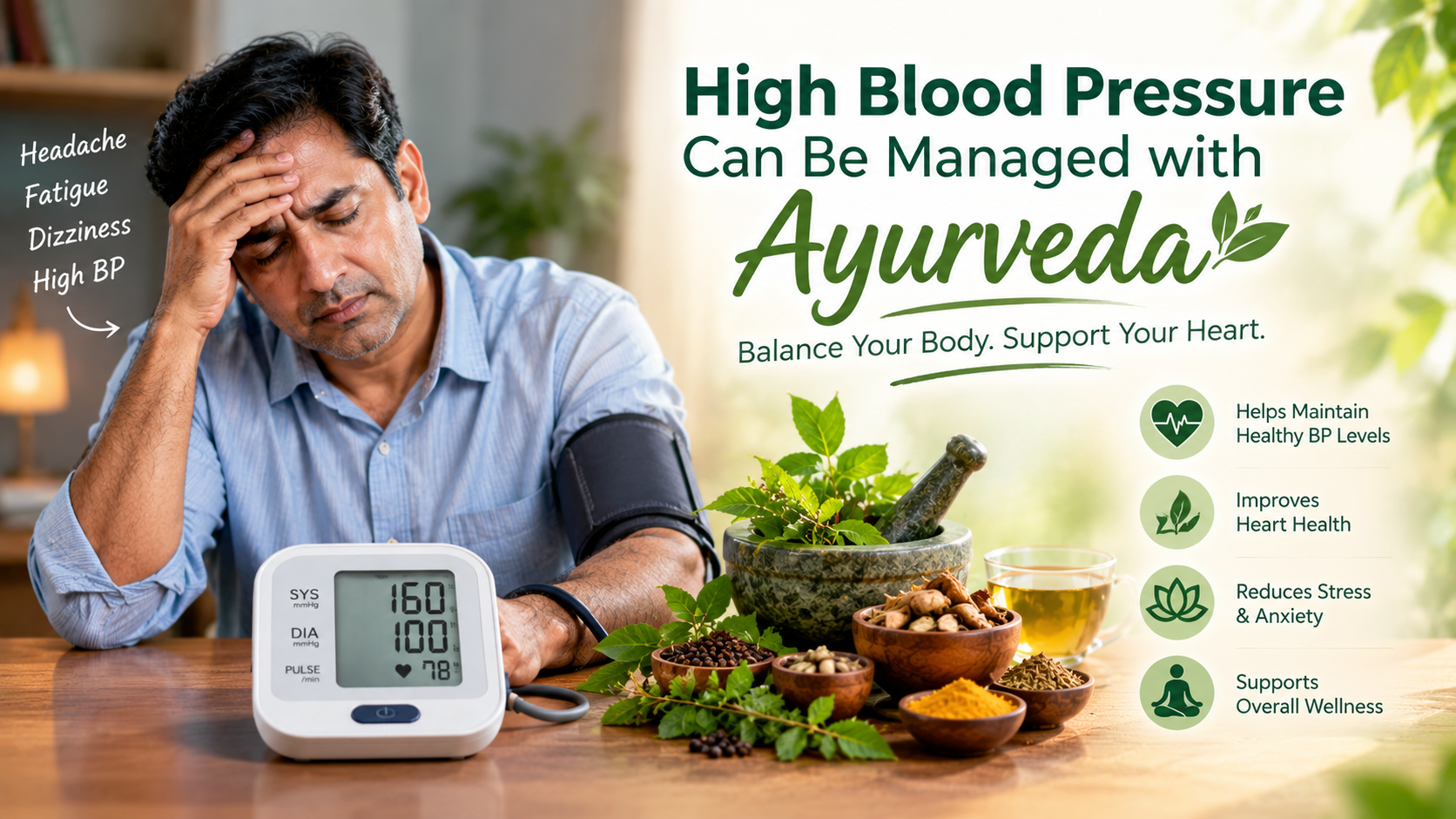
High Blood Pressure Can Be Managed with Ayurveda: A Holistic Approach to Better Heart Health
High blood pressure (Hypertension) is the most common health issue found in the majority of adults. Due to this competitive world and tremendous work pressure, deadlines, youth are getting affected and they get prone to high blood pressure. We can say that this works in our body as a slow poison. It gradually starts affecting our heart, kidney and other serious issues. Hence, we need to look after it on time and seek medical help.
Now, Allopathy is no doubt the best approach but most of the people are getting inclined towards Ayurveda. This is an ancient therapy where the focus is not just on medicines, but on the overall routine of the person. This holistic approach ensures a longer and healthy life. It includes, balanced nutritious diet, physical activity, stress management and meditation. These principles may complement conventional treatment and help to support overall cardiovascular health.
However, this does not come to a conclusion that Ayurveda is the best one and everyone must follow it. No, People must continue taking regular medications but at the same time some Ayurvedic principles will also be beneficial for the overall blood pressure management plan.
Understanding High Blood Pressure
Blood pressure means force exerted by circulating blood against the walls of the arteries. When this pressure remains consistently elevated, the heart has to work harder to pump blood throughout the body.
How Ayurveda Approaches Blood Pressure Management?
In Ayurveda, before starting with any process, the complete body is studied, the person's family history, routine, and other health issues are discussed. Based on this, Ayurveda gives a balanced diet, some lifestyle rules, and mental well-being is considered. Although traditional Ayurvedic concepts are not identical to modern medical explanations of hypertension, some lifestyle practices overlap with approaches recommended by cardiovascular health experts. To get the best Ayurvedic treatment for hypertension in dombivli, manpada, consult with the Dr. Rahul Mandole is an expert.
Can Ayurveda Cure High Blood Pressure?
Well, till now, no one has predicted that Ayurveda alone can cure high blood pressure. But at the same time it nowhere stated that the approach is wrong. Hence, we can't come to any of the conclusions.
A more appropriate approach is to combine safe, evidence-based lifestyle changes with prescribed medication when needed. Ayurvedic practices such as balanced eating, relaxation, suitable yoga, and regular routines may be useful additions when they are appropriate for the individual.
The goal is sustained blood pressure control and a lower risk of long-term complications, rather than relying on a single remedy.
1. Snehana (Ayurvedic oil massage)
Snehana therapy includes some specific oils, used as a gentle massage. This gives relaxation and eases muscular tension. Also, by this massage, a person gets a sound sleep and stress is also reduced.
Clinical note: Please note that only massage is not an appropriate treatment for hypertension. Consult with the health practitioner and based on their recommendations this therapy can be done. As for older people having heart, skin or circulation problems, this may not be recommended.
2. Petiswed (whole-body Swedana / sweat-induction therapy)
Petiswed refers to complete body Swedana (sweat-induction)therapy which is done in a closed room where the head is kept outside, to the level of the equipment and based on the clinical protocol. This is done in order to induce sweat or heat over the body rather than provide whole-body sweat-induction. Again, this is too not solely recommended as a hypertension treatment. Hence, consult with the health practitioner.
Clinical note: This Petiswed may cause dehydration, dizziness, or fluctuation in the blood pressure. Take the advice of a health expert and proceed further. Generally it is stated that people having issues of uncontrolled blood pressure, unstable heart disease, kidney issue, this therapy is not recommended.
3. Basti (medicated enema therapy)
Basti is a classical Panchakarma procedure involving administration of prescribed preparations through the rectal route. In Ayurveda, this treatment is given as per the individual's assessment. Its role in hypertension specifically is not established by strong clinical evidence.
Clinical note: It should only be considered after medical and Ayurvedic assessment, with careful attention to bowel, kidney and heart conditions. Do not attempt this at home or use it to alter prescribed medicines.
4. Shirodhara
Shirodhara, means a selected liquid flow (generally oil) is continuously given to the forehead in a very stable way. The flow is not heavy. Patients may find the procedure calming, and it may support relaxation or sleep for some individuals.
Clinical note: Research on Shirodhara for hypertension remains limited. A 2025 systematic review found symptom relief in some studies, but the pooled blood-pressure change was small and not clinically meaningful; a clear effect on systolic pressure was not established.
Shirodhara and blood pressure: what can we responsibly say?
Stress, poor sleep and persistent anxiety can make healthy blood-pressure routines harder to maintain. Shirodhara may be used as a relaxation-focused adjunct for selected patients, and some small studies report improvement in symptoms such as insomnia, fatigue or palpitations. However, current research does not show that Shirodhara reliably controls hypertension on its own. Any benefit should be viewed as supportive, not as a replacement for medication, home monitoring or medical follow-up.
Before treatment, discuss your blood-pressure readings, medicines, medical history and any symptoms with your clinician. The practitioner should monitor how you feel during and after the procedure and avoid treatment when it is not clinically appropriate.
When Should You Seek Medical Help?
This is a common mistake made by most people. Most of the people ignore high blood pressure and avoid medical assessment.
But need to know that if your blood pressure is above 180/120 mmHg, wait at least one minute and measure it again. If it remains the same, seek medical advice. If it is accompanied by chest pain, shortness of breath, weakness, numbness, difficulty speaking, vision changes, or other concerning symptoms, seek emergency medical care immediately.
Do not delay emergency treatment to try an herbal remedy or home treatment.
Conclusion
Ayurveda offers a holistic perspective on daily habits, stress management, nutrition, and well-being. Therefore, Dr. Rahul Mandole, having 17+ years of experience, has an ayurvedic clinic Dombivli Manpada, offers a perfect approach to high blood pressure.
The safest approach is to combine healthy lifestyle choices, regular monitoring, appropriate medical treatment, and professional guidance before using Ayurvedic medicines or supplements.